
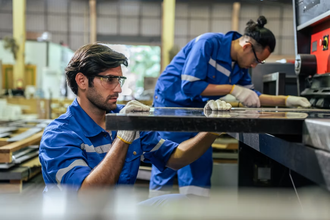
For decades, “blue collar” meant workers wearing denim, such as those employed in the manufacturing industry or the mechanics sector. Although these stereotypes of blue collar workers do still persist to this day, the definition of blue collar jobs has evolved significantly. In the modern day, hands-on professions have become more technological and are very important in powering the economy.
Historically, the term separated hands-on jobs from desk-bound white-collar office roles. The name came from durable dark blue denim shirts worn by laborers long ago. These dark fabrics hid dirt and oil stains while workers tackled tough daily tasks. Today, modern trade jobs blend physical craftsmanship with smart digital technology and high pay.
Today, the line between physical labor and office work is blurring. To really see what blue collar really means, look at how trade professionals use diagnostic software alongside classic equipment.
Moving Past Old Stereotypes and Outdated Myths
To understand what blue collar really means, you must first throw out old misconceptions about manual work. For years, society pushed a false story that trade jobs were only for people who skipped college or could not land an office job. This outdated view caused many young people to ignore trade careers completely, leading to a shortage of skilled technicians across the country.
In reality, modern trade work requires high intelligence and continuous problem-solving. An electrician must master complex electrical codes and circuit math. An HVAC technician must understand fluid dynamics and modern refrigeration chemistry. Today’s trade workers are specialized technical experts who solve complex, real-world problems every single day.
- High-Tech Tools – Trade crews now rely on thermal cameras, laser levels, and smart diagnostic tablets.
- Continuous Learning – Rapidly evolving building codes and green technology require constant training.
- Critical Thinking – Technicians must analyze broken systems and find root causes without a pre-written guide.
- Financial Freedom: Many trade professionals earn six-figure salaries without carrying mountain-sized student debt.
The Modern Blend of Physical Labor and Smart Tech
The main changes that have happened in construction work are the introduction of advanced technologies on job sites. Nowadays construction technicians do not just turn a wrench all day long – they program automated robots and solve network communication problems. Learning what does blue collar really mean today means seeing how physical skills and digital tools work hand in hand.
Nowadays construction workers use GPS-guided machines that help them to grade construction sites with accuracy. Plumbers use special high-resolution fiber-optic cameras for checking underground pipelines without digging the entire area. Electricians install smart home automation systems completely controlled by smartphone apps. The professionals who adopt these new technologies are able to finish their projects faster and get much higher salaries.
The modern tradesperson is a hybrid expert. They combine physical skill with high-tech diagnostic logic to keep our world moving forward.
High Earnings and Unmatched Job Security
When people ask what does blue collar really mean for their bank accounts, the answer is simple – financial independence and long-term stability. While many office workers face shifting job markets and remote-work layoffs, trade professionals enjoy consistent and high demand for their services. Infrastructure breaks and plumbing systems fail regardless of economic ups and downs.
According to official employment data, specialized trade roles consistently offer high median wages and rapid job placement. Furthermore, because trade skills cannot be exported overseas or easily replaced by basic automation, skilled workers enjoy incredible job security. Industry insights show that master technicians, site foremen and trade business owners routinely out-earn average university graduates.
Pride in Building and Maintaining Real Infrastructure
Unlike office workers who spend forty hours a week managing spreadsheets or sending emails, trade professionals see tangible results from their hard work. At the end of a long workday, a carpenter can look at a newly framed home, an electrician can flip a switch to light up a building and a welder can inspect a pristine steel beam. This direct connection between effort and physical results creates deep job satisfaction.
This pride in creation builds a tight-knit community culture on the job site. Crew members depend on each other in terms of daily safety, efficient communication and performing their tasks with high quality. To understand the meaning of blue collar work, it is necessary to understand the powerful sense of fellowship, mutual respect and pride that they have because of building the physical reality of the world around us.
The Path from Field Apprentice to Business Owner
One of the most exciting aspects of modern trade work is the clear path toward business ownership. Unlike corporate settings where climbing the ladder requires years of office politics, the trades offer a direct route from entry-level worker to independent business owner. Industry stats show that a huge portion of successful contracting firms are owned by former field apprentices.
Once you master your craft, acquire your trade license and build a solid local reputation, starting your own company becomes a natural next step. Running your own trade enterprise lets you set your own rates, choose your projects, and hire your own crews. You own a valuable asset that builds personal wealth and serves your local community for decades.
Redefining the Future of Hands-On Work
So, what does blue collar really mean? It means strength, technical intelligence and pride. It represents the hardworking men and women who build our homes, power our cities and keep our communities running every day. By combining practical trade skills with modern technology, today’s trade professionals are building high-paying careers on their own terms. For technicians looking to showcase their skills and connect their hands-on experience with new career opportunities, The Blue Collar Crew provides a digital way to build a stronger professional presence.