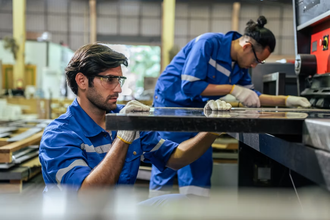

You’ve heard it your whole life: go to college, get a degree, land a desk job. That’s the only path to success, right?
Except more and more young people are calling BS on that narrative. They’re watching their friends graduate with mountains of debt and no clear path forward, while skilled tradespeople are landing solid jobs, buying homes, and building real wealth before they turn 30.
Something’s shifting. The trades aren’t just a backup plan anymore—they’re becoming the smarter choice for a generation that’s tired of being sold broken promises.
Let’s talk about why young people are flooding back into blue collar work, and what it means for anyone trying to figure out their next move.
The College Debt Reality Check
Here’s the truth nobody wants to say out loud: college isn’t the golden ticket it used to be.
The average student loan debt sits around $40,000, and that’s before interest. Plenty of graduates are pushing six figures in debt, working jobs that have nothing to do with their degree, and wondering when life is supposed to start feeling secure.
Meanwhile, trade workers are earning while they learn. Apprenticeships pay you to develop skills that are immediately valuable. No loans. No debt. Just real experience and a paycheck from day one.
The math is simple:
- Four years of college debt vs. four years of paid apprenticeship
- Entry-level office salary vs. journeyman wages with overtime potential
- Uncertain job market vs. industries desperate for skilled workers
Young people can do math. They’re choosing the path that actually builds wealth instead of digging a financial hole.
Skilled Trades Are Facing a Labor Shortage—And That’s Your Opportunity
The construction, electrical, plumbing, and HVAC industries aren’t just hiring. They’re practically begging for qualified workers.
Why? Because an entire generation was pushed toward college, leaving a massive gap in the skilled labor force. Baby boomers are retiring faster than new workers can replace them, and the infrastructure of this country literally depends on trades getting filled.
This isn’t some distant problem. This is happening right now, and it creates serious opportunity for anyone willing to learn:
- Higher starting wages to attract new workers
- Better benefits and job security
- Faster paths to ownership and entrepreneurship
- Geographic flexibility—trades are needed everywhere
When demand is high and supply is low, workers have leverage. That’s exactly where the trades are today.
The Myth That Trade Work Is “Less Than” Is Finally Dying
Let’s address the elephant in the room: for too long, trades were treated like the consolation prize for people who “couldn’t make it” in white collar work.
That stigma is fading fast, and for good reason.
Electricians, welders, HVAC techs, and heavy equipment operators aren’t just working hard—they’re solving complex problems, using advanced technology, and keeping society running. There’s nothing “less than” about work that requires skill, precision, and expertise.
Young people see through the old stereotypes. They recognize that:
- Intelligence isn’t measured by where you sit while you work
- Trades require continuous learning and adaptation
- Blue collar work offers tangible results and pride in what you build
- Physical work doesn’t mean your career has a ceiling
The cultural conversation is changing. Welders are posting six-figure income screenshots. Plumbers are running million-dollar businesses. HVAC techs are working four-day weeks with strong benefits.
The trades aren’t “less than.” They’re just different—and increasingly, they’re the smarter bet.
Technology Hasn’t Replaced Tradespeople—It’s Made Them More Valuable
Here’s another myth worth busting: automation and technology won’t eliminate trade jobs. They’ll make skilled tradespeople even more essential.
You can’t automate experience. You can’t replace the problem-solving that happens on a jobsite when plans don’t match reality. And you definitely can’t outsource an electrician to another country when your building needs to be wired – that will happen in your own backyard.
Modern trades integrate technology constantly:
- Electricians work with smart home systems and renewable energy
- Welders use CNC machines and robotics
- HVAC techs troubleshoot computerized climate control
- Heavy equipment operators run GPS-guided machinery
Technology makes the work more sophisticated, not obsolete. And workers who combine hands-on skills with technical know-how? They’re in the highest demand.
Trade School and Apprenticeships Offer Real-World Training
Trade school isn’t college-lite. It’s focused, practical education designed to get you working fast.
Programs run anywhere from a few months to two years, and they teach exactly what you need to know for the job. No filler classes. No lectures that put you to sleep. Just hands-on training that translates directly into employability.
Apprenticeships go even further. You’re learning from experienced professionals while earning a paycheck. You’re building your network, your reputation, and your skillset all at once.
Why this model works:
- Immediate application of skills
- Mentorship from people who’ve been there
- Earning potential starts before training ends
- Lower risk, higher return compared to traditional college
You’re not waiting four years to “start your career.” You’re in it from day one.
Career Flexibility and Entrepreneurship
One of the most underrated advantages of trades? The clear path to running your own business.
Tradespeople have skills that people need. That means you’re not stuck hoping for promotions or waiting for corporate ladders to open up. You can go independent, start your own company, or partner with others to scale.
Plenty of electricians, plumbers, and contractors started as apprentices and now run thriving businesses employing dozens of people. The trades give you both a floor and a ceiling that’s as high as your ambition.
You also have geographic freedom. Need to move for family? Your skills travel with you. Tired of your city? Trades are needed everywhere from small towns to major metros.
It’s About Building Something Real
At the core of this shift is something deeper than economics: young people want work that feels meaningful.
They want to see the results of their effort. They want to build things, fix things, and know their work matters. Trades deliver that in ways a lot of office jobs don’t.
There’s pride in walking past a building you helped construct. In knowing a family’s heat works because you installed their system right. In seeing your welds hold under pressure.
Blue collar work connects you to the physical world in a way that’s deeply satisfying. And for a generation raised on screens, that connection matters more than ever.
Choose the Path That Builds Your Future
Young people aren’t coming back to the trades because they’re giving up on something better. They’re choosing trades because they see what’s actually working.
Stable income. Real skills. No debt. Clear career paths. Respect for the work. And a future they can build with their own hands.
If you’re standing at a crossroads trying to figure out what’s next, don’t let outdated advice make the decision for you. Look at the numbers. Talk to people actually working in the trades. Consider what kind of life you want to build.
The trades aren’t for everyone—but neither is college. What matters is making the choice that sets you up for the future you actually want.
Ready to explore what a career in the trades could look like for you? CREW Magazine is here to support your journey with real stories, practical advice, and a community that gets it. Keep reading, keep learning, and keep building your path forward.