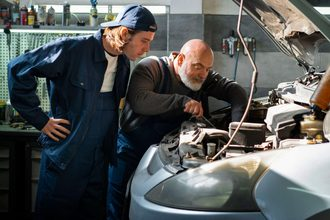

Some jobs are forgotten as soon as they are finished. Others talk about them for years, and it becomes a jobsite story.
Every crew has that one story or job they still talk about. It was supposed to be simple, then something broke, a part did not fit, or the whole plan changed while working through.
Those are the jobsite stories that stick with people, and they remember because they feel real. A little chaos, a little problem-solving, and usually someone on the crew who somehow keeps the whole thing moving.
The New-Guy Story Everyone Remembers
Nobody stays the new guy forever, but the crew may keep the evidence. Maybe you cut something too short after being told twice to measure again. Maybe you brought the wrong tool on the job site, or you may have spent 20 minutes looking for a part you had in your pocket.
Good crews laugh, but excellent crews teach. The U.S. Department of Labor explains the concept of learning through mentoring and the job as a core part of the registered apprenticeship. Some of the best lessons from the jobsite start with a mistake and end with, “Now you’ll never forget.”
The Old-Timer Story You Already Know by Heart
The tales are familiar with the date and punchline in mind. Still, there is usually a reason the story keeps coming back.
The failed motor story might actually highlight the need to check simple things first. A rushed installation might lead to a crew that doesn’t want to make the same mistake again. A challenging client might actually turn out to be an opportunity to teach a valuable lesson.
That’s how the stories from the trades serve an educational purpose without sounding like training manuals. “Back when I started…” is really someone handing the next generation twenty years of pattern recognition in five minutes.

The Job That Took Way Longer Than Planned
Every profession has such stories. The client says it is quite easy. But when you get to the site, things appear to be different: the previous installation makes no sense, the old work isn’t done the right way, or the replacement part doesn’t fit at all.
Such stories are funny only when you remember exactly the moment when you have lost all confidence.
This shows the reason why technicians are so careful when using the words, “quick job.” Old repairs, wrong measurements, bad weather, missing materials, and shortcuts by other people can quickly change everything.
That is why trade work experiences build judgment. The problem on the work order is not always the problem you find on site.
The Close Call Nobody Jokes About
Some stories change the mood the second they are mentioned. A ladder shifted. A tool kicked back. Someone almost energized the wrong circuit. A worker noticed a hazard just before another person stepped into it.
Some stories tend to change the mood as soon as they are mentioned. A ladder slid. A tool kicked back. A person nearly powered the wrong circuit. A worker spotted the danger just before someone stepped into it.
The point is what changed afterward. Maybe the crew began to check one extra thing before working. Some workers might have tightened the rules on lockout procedures. Or maybe the previously quiet apprentice is now able to speak up.
OSHA encourages workers to report dangers and near misses because being involved allows them to convey ideas in the most effective way. Good jobsite culture turns a close call into a reason not to repeat it.
The Story Is Usually About the Crew
Ask someone about an old project long enough, and the conversation usually stops being about the equipment.
They remember the coworker who stayed late because nobody wanted to leave one person behind. The foreman who took the heat when the crew made a mistake. The guy who could make everyone laugh during the worst shift of the month. That is crew camaraderie.
The work gives the story a setting. The people are why anyone still wants to tell it. A job may teach you a trade, but a crew teaches you how to work when everyone is tired, behind schedule, or under pressure.
Some Stories Should Not Stay on the Jobsite
The Mack Story piece is effective because it tells a detailed story. As a machine operator, the protagonist spoke about how he discovered a way to reduce CNC changeover downtime by 75%, only to have his idea turned down by his supervisor, who did not appreciate the frontline workers.
Even today, that experience is significant as it touches on several matters, including knowledge, pride, management, and being heard.
That is what great blue collar stories do. They preserve the lessons, punch lines, mistakes, and important moments of pride that won’t be included in job descriptions.
Tools are replaced, trucks are sold, and crews find new jobs, but stories will travel. Got one your crew still brings up whenever someone new gets hired? Blue Collar Crew invites tradespeople to share stories from the field, tough days, wins, jobsite humor, and advice with the wider skilled trades community.